From heritage to Artificial Intelligence, how BRICS 2026 plans to transform tourism across member nations.
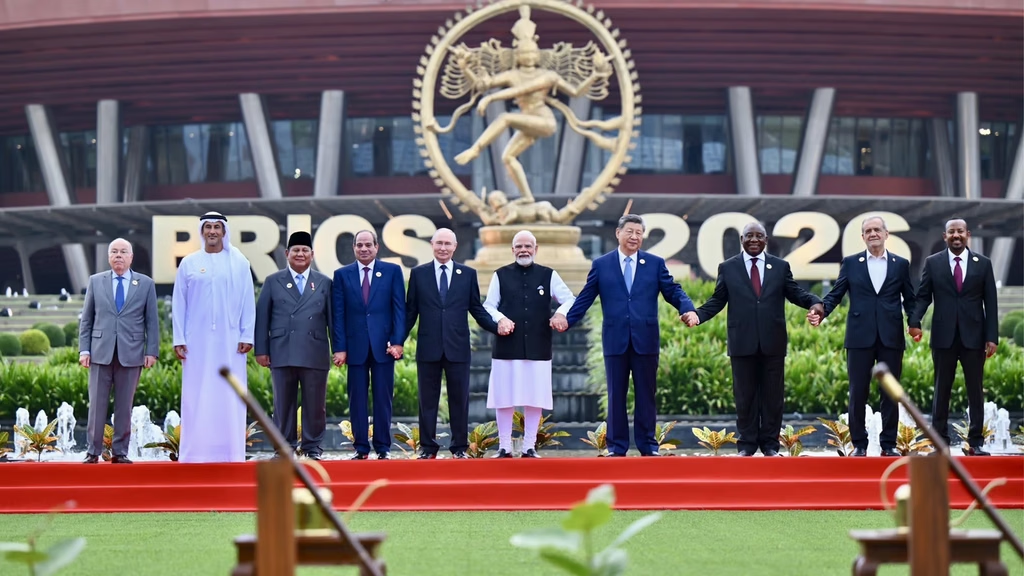
Tourism has emerged as a significant pillar of closer people-to-people ties among BRICS nations, with the New Delhi Declaration 2026 calling for stronger cooperation to make travel more sustainable, inclusive, smarter and more resilient.
Adopted unanimously at the 18th BRICS Summit in New Delhi, the member nations reiterated the importance of people-to-people exchanges and initiatives in enhancing mutual understanding, friendship and cooperation among them and their peoples under the section ‘Strengthening Cultural & People-to-People Cooperation’.
For the travel and tourism industry, however, the tourism push could be one of the most significant takeaways.
BRICS 2026 Backs Sustainable Tourism, Digital Innovation & Stronger Travel Links
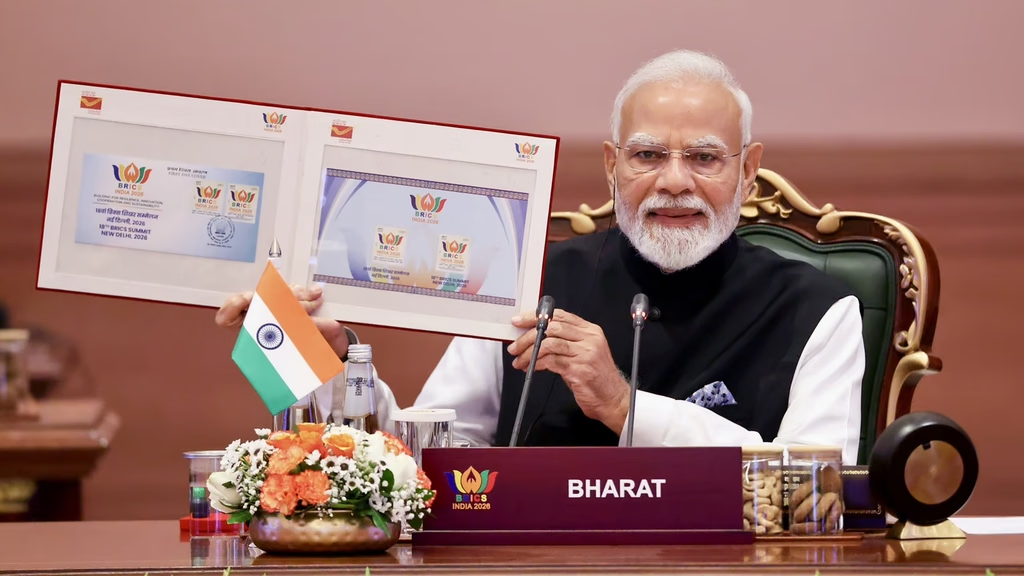
BRICS countries described tourism as a major driver of economic growth, employment and foreign exchange, while highlighting its role in supporting local communities, preserving heritage, diversifying economies and strengthening cultural understanding.
The declaration also points to the vast untapped potential within the BRICS tourism market, with member countries encouraged to promote sustainable and resilient travel experiences aligned with the UN Sustainable Development Goals.
From ecotourism and community-led travel to gastronomy, health, heritage and nature-based tourism, the grouping wants to broaden the range of experiences available across member nations.
Technology is also set to play a bigger role. BRICS backed greater knowledge-sharing on responsible and regenerative tourism, while encouraging the use of Artificial Intelligence and digital tools to build smarter and more efficient tourism systems. Digital payments, skills development, investment and easier movement of tourists also feature prominently.
The declaration welcomed the Communique of the Tourism Ministers’ Meeting held in Jaipur, which focused on strengthening intra-BRICS tourism cooperation and improving the region’s international tourism competitiveness.
The message from New Delhi is clear: BRICS sees tourism not simply as travel, but as a bridge connecting economies, cultures, and communities.