India’s tourism sector is standing at a paradoxical junction where its constraint is not the absence of digital and AI integration in the sector; instead, fragmented experiences and governance limit their impact.
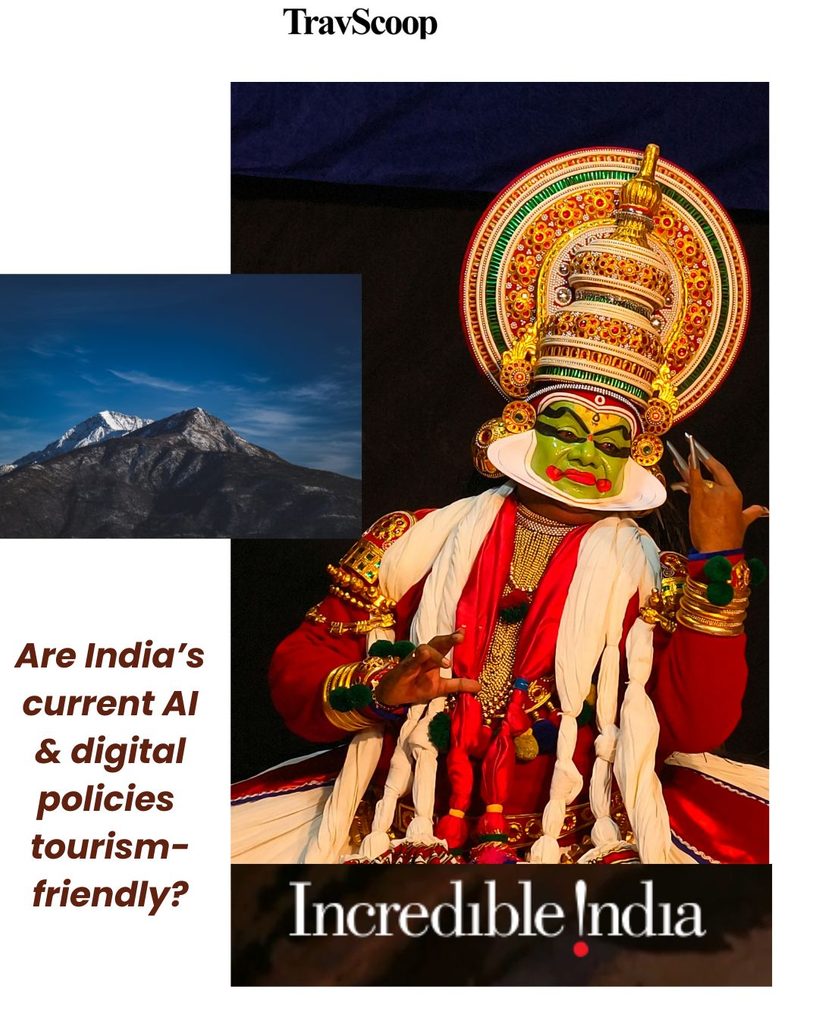
As India celebrates World Tourism Day with its global partners, a few pressing questions continue to shadow the sector. Are the government’s current Artificial Intelligence and digital policies sufficient to truly strengthen tourism, and are these policies genuinely tourism‑friendly? Despite ambitious initiatives, India’s tourism industry still finds itself at a paradoxical juncture.
While ranking 31st in the World Economic Forum’s 2026 Travel & Tourism Development Index, largely due to low travel costs and rich cultural and natural resources, India’s tourism sector is constrained by uneven digital integration and governance gaps that prevent technology from becoming a major driving force behind the tourism industry.
India has already made significant investments in digital and AI across sectors, including tourism. These efforts are most visible in the revamp of the Incredible India website, which was redesigned to address interoperability gaps within the sector and bring all the data at one central platform. However, the implementation remains fragmented across state tourism boards. This reflects a policy architecture that is yet to translate strong digital ambitions into a fully integrated, AI‑ready tourism ecosystem.
National Digital Tourism Mission (NDTM)
The Central government launched the National Digital Tourism Mission (NDTM) to build an integrated digital tourism ecosystem, but centre–state friction and fragmented implementation persist.
As a stand-alone subject, States often adopt independent tourism policies that sidestep central guidelines, and the Ministry of Tourism’s recent parliamentary response on AI confirms that rollout depends largely on State and UT governments. The Centre therefore promotes technology through schemes like Swadesh Darshan 2.0 and PRASHAD rather than operating a single nationwide AI‑tourism platform.
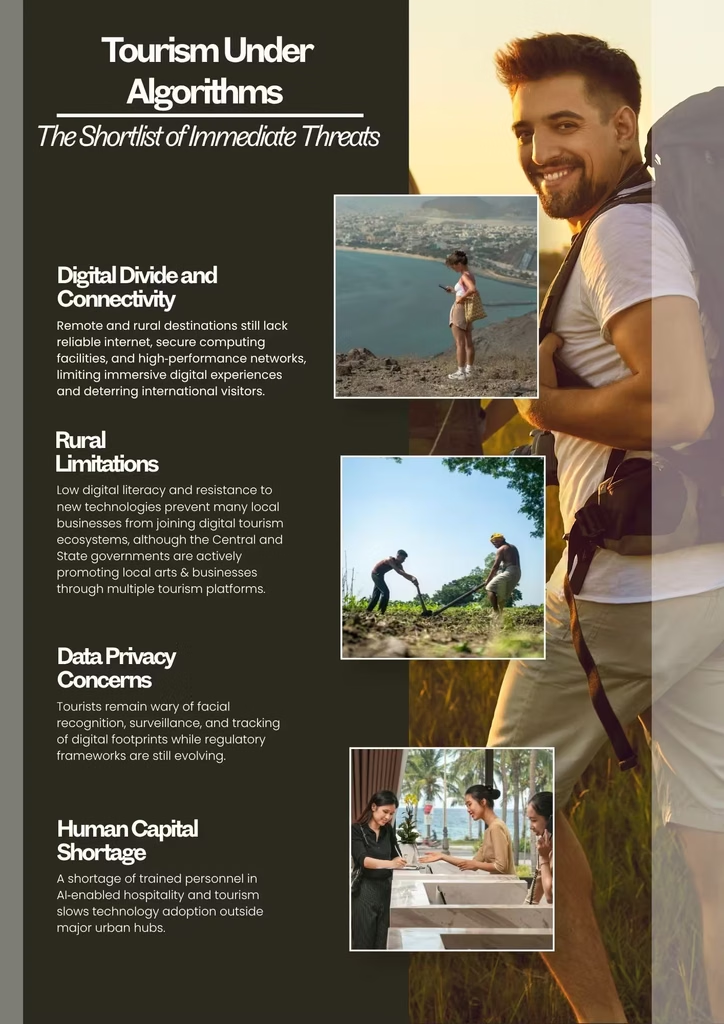
As a result, visitors encounter disjointed experiences across isolated systems; wealthier states with stronger digital infrastructure advance rapidly while ecologically sensitive and lesser‑known regions lag, widening the digital divide; and data remains isolated, undermining predictive capabilities. Even initiatives such as the Ministry’s 2026 partnership with Google India to leverage AI for national promotion have yet to shift local operations from reactive to predictive visitor management.
One of the prime examples that we see is in the case of Kerala or Karnataka, states with larger budgets. They aggressively implemented advanced AI, predictive analytics, and marketing tools. Conversely, ecologically sensitive or lesser-known destinations that heavily rely on tourism (like parts of the Northeast) often face underlying infrastructure constraints, widening the digital gap between prominent and offbeat locations.
Even in the case of NIDHI+, it primarily focuses on registration, information and industry integration to create a digital database for tourism and hospitality businesses; it is not yet a comprehensive AI-driven predictive tourism system. Such a system is the need of the hour, especially to push domestic tourism.
Even Agoda’s 2026 report finds 68% of Indian travellers are likely to use AI for trip planning. This number holds significant power to impact domestic tourism in India.

Digital Personal Data Protection (DPDP) Rules, 2025
Among all this, the Digital Personal Data Protection (DPDP) Rules , 2025, which establishes personal-data protection requirements, brings in the challenge of carefully designed consent, data-sharing and governance mechanisms within the ministries and government-private entities.
As many of the public and private entities, including various states, have their own individual data systems that do not interact through a common language, limiting analytics and policy-making.

So here comes the bigger question: How can India use large-scale tourist behavioural data for AI-driven personalisation and prediction while maintaining privacy, consent and responsible data governance?
Contexual Rethinking
Although the Indian government has made aggressive efforts to address the interoperability gap, it needs to rethink its policies, especially in these broader contexts: Data Sharing, Governance, Bias Information, and Privacy.
Data Sharing
Data-sharing raises the more complex question of who will actually share information, under what conditions, and with whom. Tourism data in India is scattered across multiple institutions. The current databases serve different institutional purposes and operate in distinct data environments, making true interoperability and effective data-sharing a persistent challenge.
Governance
Once tourism becomes data‑driven and AI‑driven, the challenge is no longer simply about collecting data but about deciding who controls it and the AI systems built from it. Imagine a tourism platform that integrates hotel bookings, transport, tourist profiles, attraction visits, location data, and online behaviour to recommend destinations.
Governance questions immediately arise: who owns the data? The tourist, the hotel, the online travel agency, the state, the central government, or the platform itself?

Equally complex is responsibility for AI decisions: if a system repeatedly promotes a few famous sites while sidelining hundreds of lesser‑known destinations, is the fault algorithmic, data‑related, platform‑based, or rooted in tourism policy? These questions matter because AI shapes what tourists see, where they go, and which places reap economic benefits.

Moreover, human biases can undermine digital progress, as in case of Digital Yatra. To incentivise uptake, many airports, sometimes, reduce the number of non‑Digital Yatra gates, creating artificial crowding and delays for passengers who opt out or require manual processing.
Privacy
India’s Digital Personal Data Protection Rules, 2025, add a crucial governance layer to personal data processing. Notified in November 2025, these rules are especially relevant to tourism because future AI systems will rely on highly granular behavioural data, i.e. tracking everything from searches and bookings to site visits, photos, and reviews. While aggregating such information can yield powerful tourism insights, it also raises serious privacy and governance concerns. Rather than treating privacy regulation as an obstacle, it should be seen as a necessary governance condition that enables the responsible, ethical deployment of AI in tourism.
Technology constantly evolves, and its integration across sectors can streamline administration and make life easier. As we embrace these advances, we must also confront the often‑invisible harms they introduce. Economic benefits should never come at the cost of people’s safety or privacy.