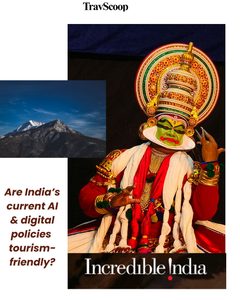
From Incredible India to intelligent India, how digital technology and Artificial Intelligence (AI) and digital tourism is changing the way foreign travellers discover the country while redesigning the tourism story.
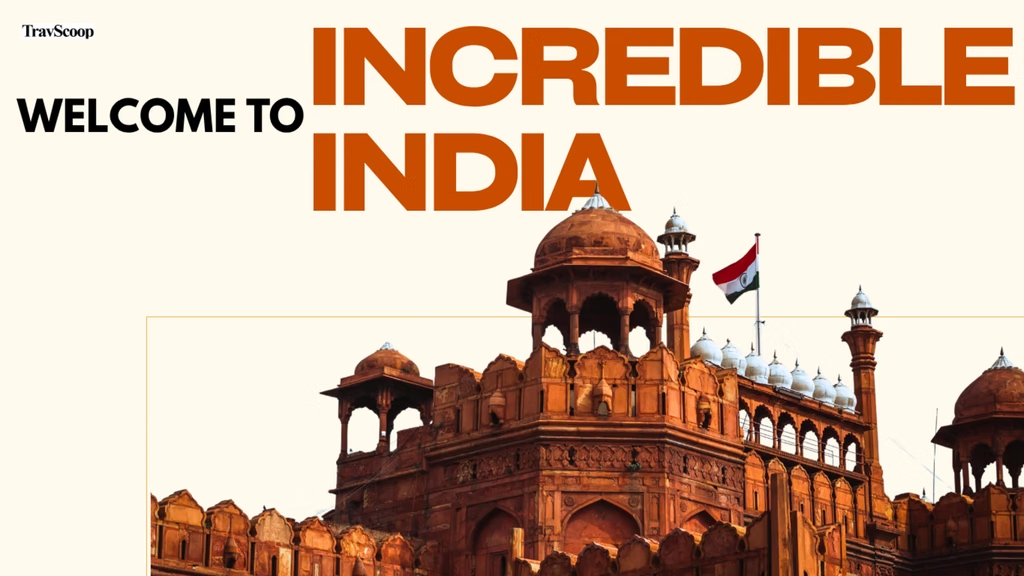
Tourism has always been about discovery. However, the discovery often begins long before a traveller boards an aircraft.
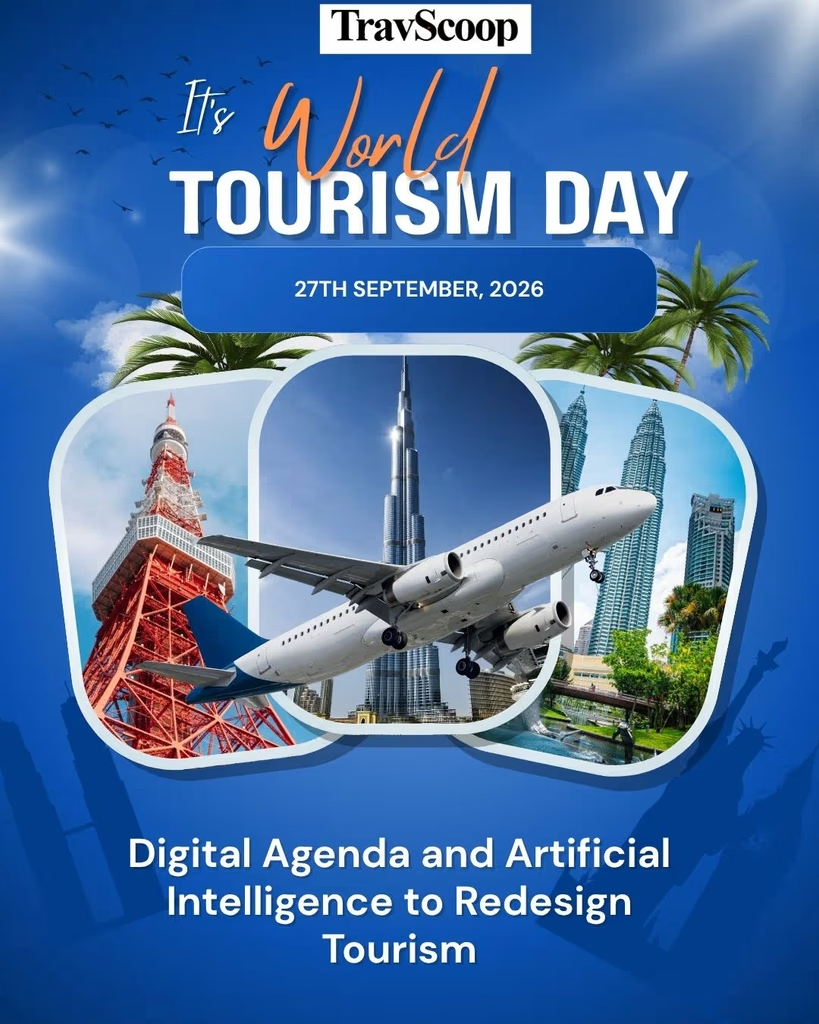
A Google search, an Instagram reel, a virtual tour, an AI-generated itinerary, or a digital booking platform can now influence where a traveller goes, what they experience, and how long they stay. That makes the theme of World Tourism Day 2026, ‘Digital Agenda and Artificial Intelligence to Redesign Tourism’, particularly relevant for a country as diverse as India.
For India, the opportunity is vast. The country does not lack destinations; rather, it faces the opposite challenge of an extensive and diverse tourism inventory that is often difficult for travellers to discover, navigate, and experience seamlessly.
And this is precisely where India’s digital tourism push becomes important.
India’s Tourism Journey Becoming More Digital
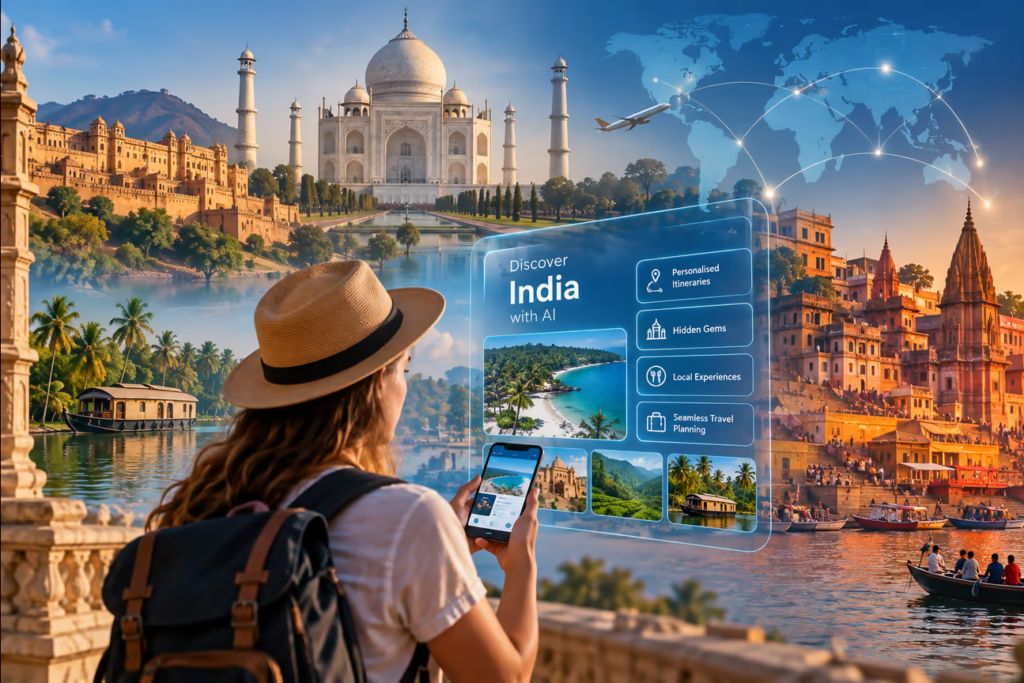
One of the clearest examples of this transition is the Ministry of Tourism’s (MoT) revamped Incredible India Digital Platform (IIDP), which brings together information on the country’s cultural, heritage, adventure, wellness, gastronomic, rural, and other tourism experiences. Most importantly, it uses an AI-powered tool to personalise visitor experiences, including real-time weather information, city exploration, and travel services. It also connects tourists with booking options for flights, hotels, cabs, buses, and ASI monuments.
It is more than just making tourism information available on the internet; it means moving from a traditional tourism website to a digital travel companion.
For international tourists, that distinction matters. A first-time traveller planning an itinerary in India may need guidance on whether to include Rajasthan in the Golden Triangle tour, where to explore Buddhist heritage sites, which transportation options are available, and which side trips and alternative routes to consider.
Having access to such information can make a huge difference to a traveller’s decision-making process, helping them move from feeling overwhelmed by choices to confidently planning their journey. Personalised digital tools can play an important role in making this information easier to access, understand and navigate.
AI Can Help India Move Beyond Usual Tourist Circuit
India’s biggest tourism challenge is not merely attracting more visitors; it is also ensuring that tourism is evenly and intelligently distributed across different locations.
According to the MoT, the government’s plans for the next-generation Incredible India platform suggest that AI-enabled itinerary planning, virtual concierge services, and recommendations based on factors such as tourists’ interests, weather, events, and crowd forecasts could become a reality. The proposed roadmap could even suggest alternative attractions if a popular monument is overcrowded.
It would be of great value in a country like India. For instance, think of a foreign visitor who is searching for the Taj Mahal and is given information not only about Agra and its associated heritage, crafts, food, and cultural experiences but also about other nearby attractions. Similarly, a spiritual tourist looking to discover India’s spiritual heritage would benefit immensely from going beyond the popular temples towards lesser-known destinations. When this is done effectively, AI-driven tourism can turn the nation’s digital presence into a discovery tool for emerging destinations. And that, in my view, is where the true potential lies.
But the catch is that the country’s tourism offering goes far beyond its renowned destinations. The real question is, can AI put India’s hidden tourism gems on the global map, and more importantly, can it help the country market the right experiences to the right audiences at the right time more effectively?
Google Collaboration Elevates India’s Digital Tourism Game
India’s digital tourism aspirations are not restricted to government platforms, but extend well beyond. In June this year, MoT entered into a Memorandum of Understanding (MoU) with Google India to strengthen the digital promotion of Indian destinations through digital technologies, Artificial Intelligence and data-driven insights. The ties also focus on knowledge-sharing and capacity-building initiatives, with the aim of India’s global tourism outreach and making its destinations, experiences and cultural heritage more visible to both domestic and international travellers.
It is clear that foreign travellers are now more reliant on digital ecosystems than on traditional brochures or tourism campaigns to discover destinations and for information. India must therefore be present, visible and discoverable where these tourists are interacting, searching, engaging, comparing and making travel plans or itineraries.
The partnership also highlights the growing recognition of the importance of data in modern-day destination marketing and management.
From Promotion To Traveller Experience

India’s tourism promotion strategy is evolving beyond destination inspiration and marketing activities towards creating a more integrated digital travel experience. The country’s e-visa facility has simplified the visa application process for foreign tourists, allowing them to apply for visas online.
Moreover, the Ministry has also strengthened this digital ecosystem by integrating the Incredible India Digital Platform with the National Integrated Database of Hospitality Industry (NIDHI+). This enables travellers to access information on registered tourism service providers, including tour operators and travel agents, making it easier to discover, plan and arrange varied aspects of their journey through a connected digital platform.
Meanwhile, India’s tourism policy has already identified technologies, including AI, Big Data, Cloud Computing, Virtual Reality, Augmented Reality and the Internet of Things as tools for creating smart tourism destinations.
Thus, the way forward is becoming clearer: digital technology needs to be integrated across every stage of the traveller’s journey, from inspiration and planning to booking, travelling, the experience itself, and post-trip engagement.
Technology Should Enhance India’s Story, Not Replace It
There is, on the other hand, a caution here. The country must recognise the importance of its own unique offerings and not get so captivated by digitalisation that it overlooks the human element. Digitalisation is not equivalent to tourism development. While AI can recommend a destination or plan a trip, it cannot replace the human warmth and hospitality that foreign tourists are eager to experience in India.
Although a virtual heritage experience can be fascinating, it cannot replicate the feeling of being actually or physically present at an ancient monument. Likewise, the authenticity of an experience, such as staying in a village, interacting with locals, and discovering rural India, must come from genuine grassroots-level experiences, not from AI algorithms.
The nation’s most valuable tourism assets still lie in its people, culture, heritage, food, spirituality, landscapes, and stories. AI can help make these assets easier to discover, rather than making tourism feel automated. The Tourism Ministry should ensure that its use of AI and digital technologies complements its offerings rather than diminishing them.
World Tourism Day 2026: Real Opportunity For India
World Tourism Day 2026 arrives at an interesting time for Indian tourism. The country is already experimenting with AI, digital platforms, immersive technologies, data-driven promotion, and smarter destination management. Furthermore, it has also placed AI and Tourism among the thematic priorities of its 2026 BRICS Tourism Working Group Meeting discussions.
The next step is to leverage these ideas and create a seamless ecosystem that offers a frictionless experience for foreign tourists.
If India combines its digital capabilities with improved connectivity, reliable and accessible tourism information, multilingual assistance, responsible use of AI, strong cybersecurity, and active community participation, the impact could be far beyond creating a smarter tourism website. It could help build a more connected, personalised, and seamless tourism ecosystem that could take the tourism industry to greater heights.
Such an approach could also encourage tourists to experience India beyond the well-known cities and established tourist circuits, giving them an opportunity to discover the country’s lesser-known destinations, cultural experiences, and diverse regions. In turn, technology could play a larger role in shaping how the world discovers, navigates, and experiences India.
And lastly, that may ultimately be the most meaningful interpretation of this year’s World Tourism Day theme: not using AI merely for marketing tourism, but using technology to help the world discover more of India, smartly and meaningfully for a richer travel experience.