Could India’s next tourism success story flow through its rivers instead of its skies? As Indian travellers embrace slow, immersive journeys, luxury river cruises are quietly becoming the country’s newest travel obsession.
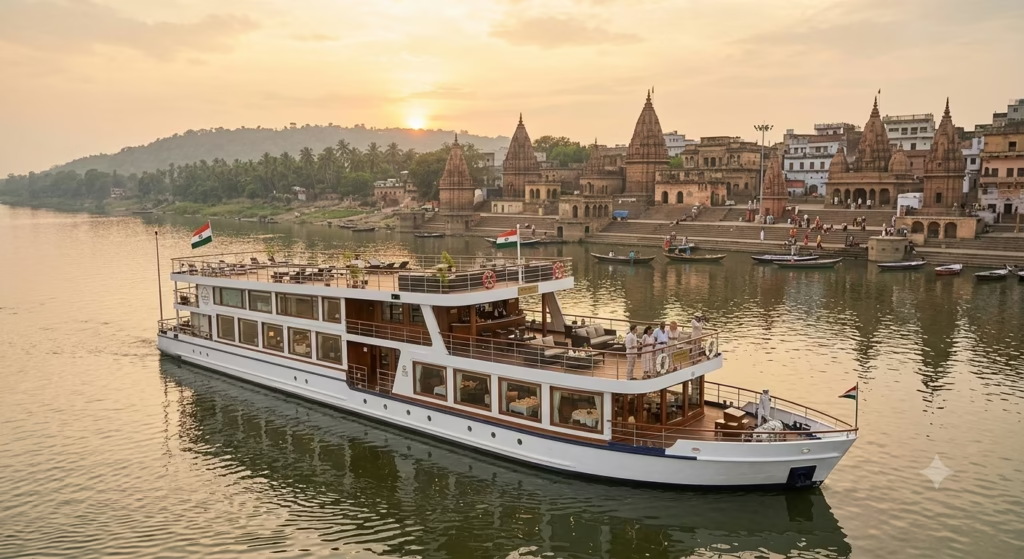
With demand for slow, experiential travel on the rise, ‘river cruise tourism’ in India is emerging as the fastest-growing segment of the tourism industry. Consequently, tourists are avoiding crowded airports and overbooked flights. Instead, they now prefer to wake up to scenic locations, wildlife sanctuaries, heritage monuments, local cuisine, and cultural performances, all from the comfort of a floating boutique hotel. What is the biggest differentiator that makes it unique? Well, these trips offer what a flight to Bali simply cannot: meaningful experiences.
Among the leading segments, luxury river cruises are emerging as a top high-end travel trend, changing the way travellers explore India. In fact, many Indians who preferred to visit abroad for cruising activities due to the lack of river cruise infrastructure at home started making a U-turn following the developments in the sector.
Routes Worth Sailing
Among the country’s biggest attractions is the MV Ganga Vilas, recognised as the world’s longest river cruise. Its 3,200-km journey links Varanasi and Dibrugarh, passing through 27 river systems, five Indian states, and Bangladesh, showcasing India’s heritage, wildlife, and cultural diversity. It has become a flagship example of the nation’s growing luxury cruise tourism.
Leading Luxury River Cruise Operators
Travellers can now choose from a range of premium operators, including the following:
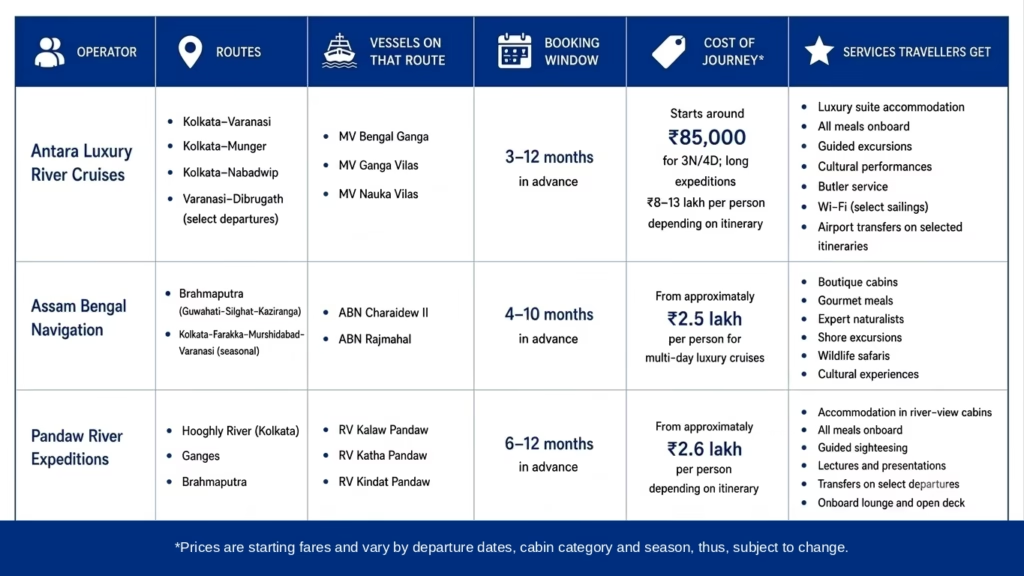
These cruises cater to luxury seekers, honeymooners, families, and international visitors seeking immersive travel experiences. Popular itineraries include cruises on the Ganga, Brahmaputra, and Sundarbans, combining wildlife, spirituality, history, scenic landscapes, and regional gastronomy into one seamless journey.
Cruising Towards Growth
The latest government data showed that the sector gained strong momentum, with voyages increasing from 371 in 2023-24 to 443 in 2024-25, reflecting a growth of 19.4%. The number of cruise vessels has also expanded from just three in 2013-14 to 25 in 2024-25, operating across 17 tourism circuits on 13 National Waterways (NWs) in nine states.
It is expected that the river cruise tourism industry in India will witness exponential growth once the required infrastructure is in place. In FY 2023-24, the number of cruise passengers was 4.71 lakhs. The government aims to carry more than 1.5 million river cruise passengers by activating over 5,000 km of operational waterways.
To boost river cruise tourism in the country, the Inland Waterways Authority of India (IWAI) signed Memorandums of Understanding (MoUs) with the governments of Delhi, Jammu & Kashmir, Gujarat, and Madhya Pradesh in 2024-25. The ties aim to commence operations on the Yamuna, Chenab, Jhelum, Ravi, along with the Kukshi–Sardar Sarovar Dam stretch, enhancing regional tourism opportunities.
To tap this growing market, cruise companies like Antara Cruises recently announced plans to invest over ₹500 crore to expand luxury river cruising on the Brahmaputra in the next five years. The investment will add four new cruise vessels, strengthen tourism infrastructure, and develop the cruise ecosystem in Assam. Aligned with the Centre’s Cruise Bharat Mission and supported by collaboration with the Ministry of Ports, Shipping and Waterways and IWAI, the initiative aims to boost high-value tourism, generate employment, and position Assam as India’s leading luxury river cruise destination.
Besides, global cruise operator Viking Cruises is making its debut in the Indian market with plans to launch its luxury vessel, Viking Brahmaputra, by late 2027, followed by the Viking Gange, which will join the fleet as the second ship on the Brahmaputra River in 2028.
As the country strengthens its inland waterways, luxury river cruising is steadily moving from a niche holiday to a mainstream travel experience. For those seeking slow travel, luxury, and authentic cultural experiences, Indian rivers may soon become more appealing than their airports. Because India’s most spectacular scenery is not at a destination; it is in the slow, unfolding journey to get there.