With hefty investments in cruise infra, new routes, and greener vessels, the Indian government the Indian government is channeling every seaway to become a global hub for cruise tourism with an ambitious target to attract 1.5 million cruise passengers by 2029.
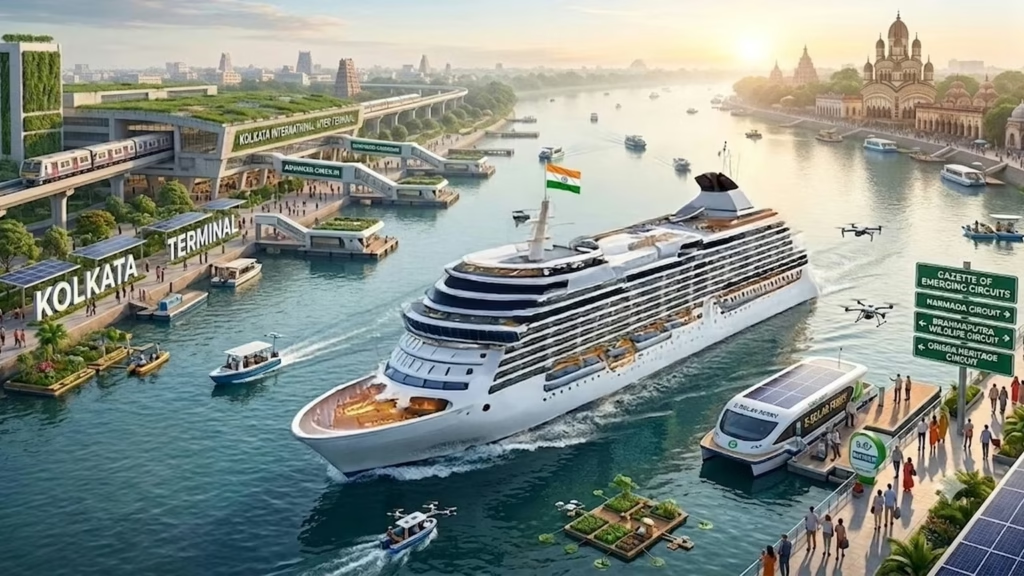
For centuries, India’s rivers have carried stories, faith, and commerce. Now, India’s inland waterways are becoming ready to carry a new generation of travellers. With the evolving tourism landscape and changing travel trends, the country’s vast river network is being reimagined as premium travel corridors that combine heritage, spirituality, wildlife, and luxury. Once treated as a niche holiday, river cruising has come a long way to become a high-growth segment of the country’s tourism economy. It is poised to become a leading river-based tourism destination globally by the end of this decade. The credit goes to the government’s strong policies, planned investments, private participation, and growing investor interest; this dream is turning into a reality.
Government Bets Big On Cruise Tourism
The Centre is leaving no stone unturned in making the sector one of the country’s biggest tourism assets. Through the Cruise Bharat Mission, launched in September 2024, the government aims to double overall cruise passenger traffic by 2029 (covering ocean and harbour cruises, river and inland cruises, and island and lighthouse cruises). The mission follows a coordinated approach involving Customs, Immigration, state tourism departments, maritime agencies, and local administrations to simplify cruise operations and improve the visitor experience. The goal is to position India as the world’s leading river cruise destination.
A ₹45,000 Cr Vision To Transform Indian Rivers
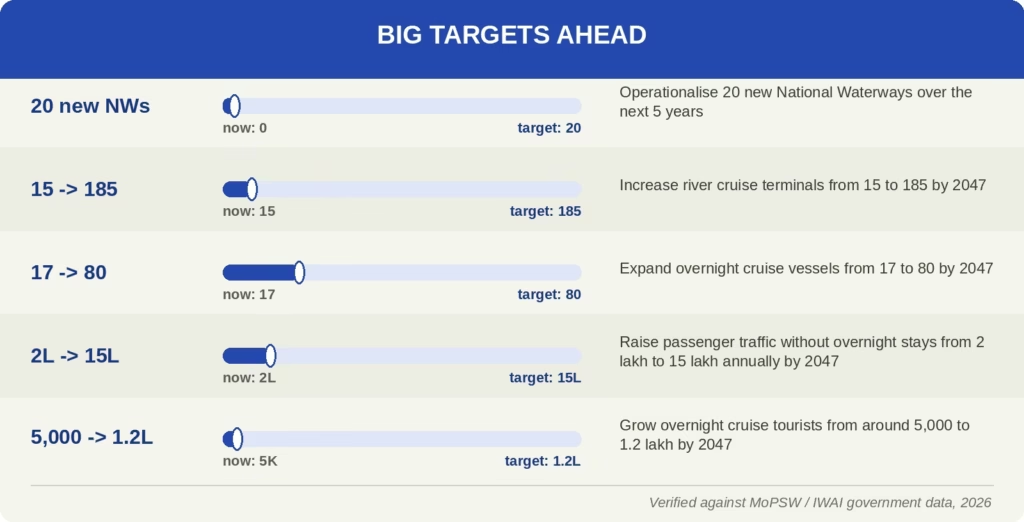
At the center of this transformation is the River Cruise Tourism Roadmap 2047, launched by the Ministry of Ports, Shipping and Waterways at the first Inland Waterways Development Council (IWDC) meeting, held in Kolkata in 2024. Built around four pillars: Infrastructure, Integration, Accessibility, and Policy, the roadmap commits an investment of ₹45,000 crore to river cruise development by 2047. Of which, over ₹35,000 crore is earmarked for cruise vessels and ₹10,000 crore for modern cruise terminals.
Passenger Numbers Are Rising
India’s cruise sector is already showing strong momentum. The latest government data shows that 4.71 lakh cruise passengers travelled on India’s inland waterways in FY 2023-24. The baseline number that the Cruise Bharat Mission wants to take to greater heights.
As a near-term goal under the Cruise Bharat Mission, IWAI has targeted developing 51 new cruise circuits on 47 National Waterways across 14 states and 3 Union Territories by 2027. It focuses on upgrading cruise terminals, ports, and related infrastructure, promoting eco-friendly tourism practices using green vessels, and creating numerous employment opportunities in the cruise industry in the coming years.
Besides, IWAI is developing dedicated cruise terminals on the Ganga and Brahmaputra rivers, with 3 cruise terminals planned in Varanasi, Guwahati, Kolkata, and Patna. In the Northeast, four more cruise terminals at Silghat, Biswanath Ghat, Neamati, and Guijan are proposed to be developed by 2027.
New Destinations Join The Map
Earlier, inland river cruising was largely focused on the Ganga, Brahmaputra, and Kerala backwaters. Today, the network is rapidly widening to include destinations across Gujarat, Madhya Pradesh, Jammu & Kashmir, Delhi, Goa, Odisha, and several other states, in partnership with the Inland Waterways Authority of India (IWAI).
Recent initiatives show how rapidly the sector is expanding:
- Delhi is developing an eco-friendly cruise circuit on a 4 km stretch of the Yamuna using electric-solar hybrid boats, under a March 2025 agreement between IWAI and the Delhi government.
- In Jammu & Kashmir, the IWAI has committed around ₹100 crore to develop cruise tourism on the Jhelum, Chenab, and Ravi (including the installation of 10 floating jetties across the J&K divisions), creating new opportunities for tourism in the Union Territory.
- Cruise operations have been initiated between Kukshi and the Sardar Sarovar Dam under a tripartite agreement between IWAI, Gujarat, and Madhya Pradesh, signed in April 2024, while stakeholder consultations across Kolkata, Kochi, and Delhi are helping shape future river tourism policies.
More Than Just A Holiday
The government’s vision extends beyond attracting travellers. Every new cruise terminal creates opportunities for hotels, restaurants, transport operators, tour guides, artisans, performers, and local businesses. The River Cruise Tourism Roadmap also recommends integrating heritage monuments, wildlife sanctuaries, handicraft markets, cultural performances, and regional cuisine into cruise itineraries, making sure that tourism benefits communities along the rivers.
Learning From Global Leaders
Taking a cue from the success of these iconic rivers like the Rhine, Danube, and Mississippi, where integrated terminals, seamless connectivity, and destination-led itineraries have transformed river cruising into a multi-billion-dollar tourism industry, India can seize the opportunity to replicate the same model by combining its rivers with centuries-old heritage cities, national parks, UNESCO World Heritage Sites, and spiritual destinations that few countries can match.
The Voyage Ahead
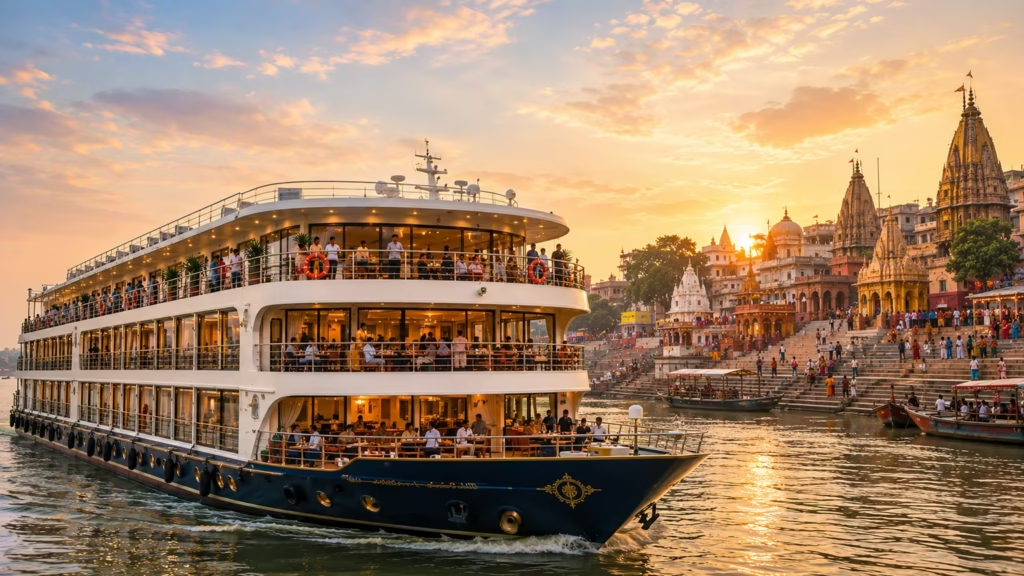
The launch of MV Ganga Vilas, the world’s longest river cruise covering 3,200 kms from Varanasi to Dibrugarh through 27 river systems and five states (plus Bangladesh), demonstrated the global appeal of India’s inland waterways.
India’s river cruise sector is entering an exciting phase of rapid expansion. As new terminals, vessels and tourism circuits come online over the next two decades, river cruising is expected to become a major contributor to India’s tourism economy, generating employment, strengthening regional businesses and creating new revenue streams across hospitality, transport and cultural tourism.
For travellers, it promises something even more valuable: the chance to experience India at a slow pace, where every wave in the river tells a different tale.