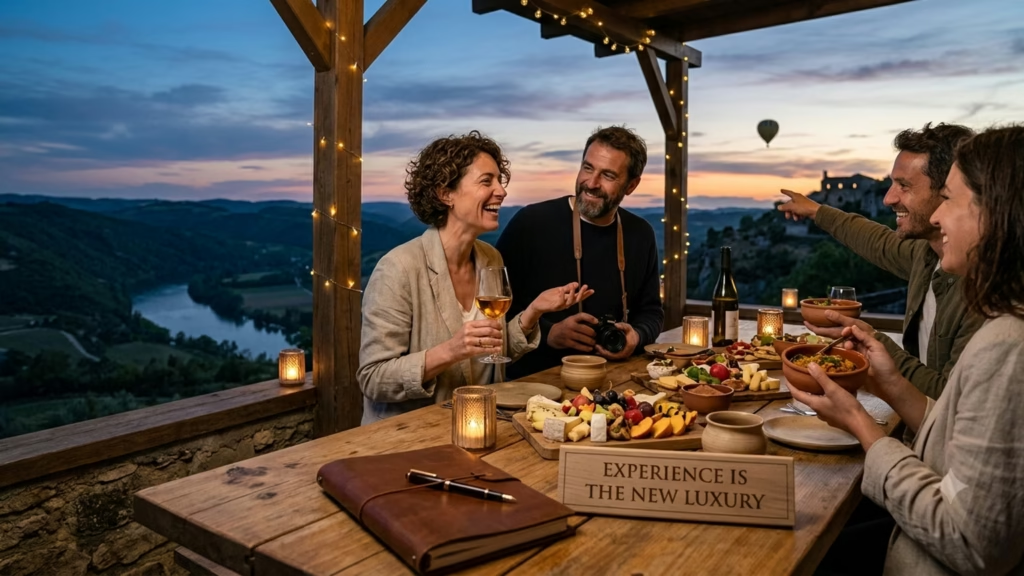
Authentic stories, cultural immersion, and meaningful local connections over standardised luxury experiences are the new luxury for today’s travellers. Check out how experiential homestays have quietly made their place in the travel landscape.
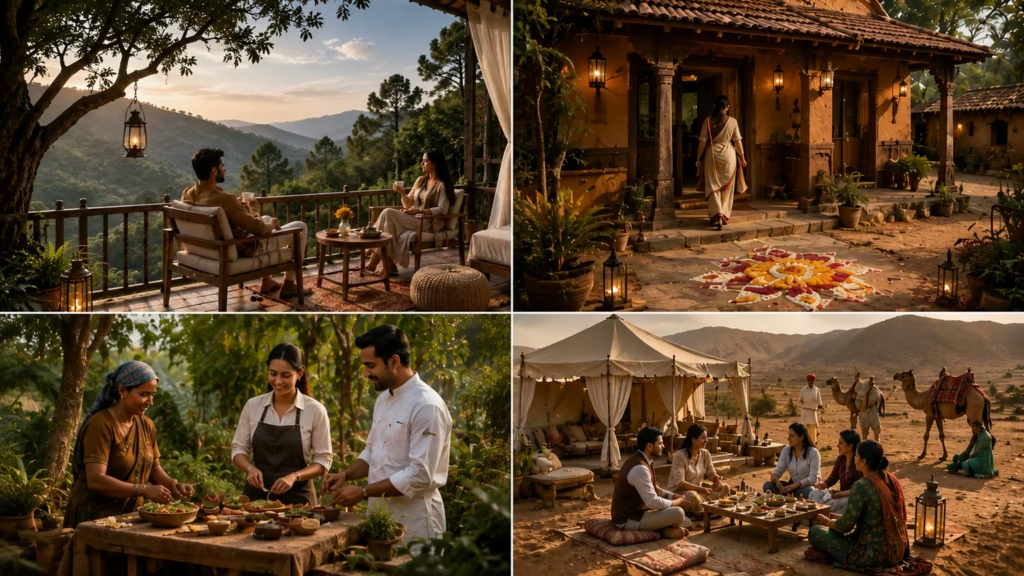
As the idea of ‘travel beyond the room’ gains momentum, modern travellers are selecting destination check-ins over hotel check-ins, influencing Indian travel. What they want is a courtyard, a potter’s wheel, and someone’s grandmother explaining why the clay needs to be this wet to hold its shape.
This is the kind of place Gen Z and millennial travellers are choosing to stay, moving away from the predictable five-star experience with infinity pools, chandeliers, and a concierge in a starched blazer.
Search Trend Hotels Can’t Ignore
If you Google ‘best experiential homestays in India’ today, you will see a search category that barely existed five years ago and is now filled with many alternatives. Travellers are not just booking a bed anymore; rather, they are choosing a block-printing afternoon in a Bagru courtyard, a Pithora painting session in a village of Gujarat, or a Himalayan kitchen where the host teaches how to roll thukpa noodles.
In contrast, a luxury hotel chain may change the Wi-Fi password, but its breakfast buffet, lobby scent, and the polished marble largely remain the same, whether you are in Udaipur or Universal City. For a generation accustomed to the same offerings everywhere, this uniformity has lost its charm. It feels like being nowhere special.
What ‘Experiential’ Actually Means
The shift is not against ease and comfort; it is against being generic. Today’s travellers still want a clean room and decent Wi-Fi. What they dismiss is the sense that every place feels interchangeable. They want a stay that feels unique to the location, unlike the ordinary.
This demand is driving a sharp increase in village tourism with Indian homestays, where some corporate marketing teams do not curate the itinerary. Instead, the itinerary flows with local customs: harvest season, a weekly haat (market), a temple festival, or a loom that has been running in the same room for generations. Here, you are not just a guest or a spectator watching everything from behind glass doors; instead, you are expected to get your hands dirty with indigo dye or take part in a cultural activity, fully immersing yourself in the experience.
Best Experiential Homestays
There are many experiential homestays across India, but we have curated some of the best that you can explore without any hassle: Dera Mandawa in Jaipur, Shahpura Bagh in Rajasthan, Neemrana Fort-Palace in Rajasthan, Amni in Coorg, The Bhuj House in Gujarat, and Maachli in Maharashtra. Here, you can cook, farm, learn about food and traditions, take part in activities, explore the surrounding community, and interact with the hosts, who will gladly lead you into a folk music session if the mood strikes. Doesn’t all this sound fantastic?
Sustainable Homestays Matter
This experiential stay trend has a more responsible aspect, with sustainable luxury eco-resorts proving that ’boutique’ and ‘low-impact’ can coexist with comfort. The best live examples of this are the solar-powered cottages in Coorg, mud-and-lime architecture in Rajasthan, and farm-to-table kitchens in the Northeast, demonstrating that luxury need not be wrapped in concrete and single-use plastic. For travellers who care about their impact, this matters as much as the thread count on the bedsheets.
Why This Trend Has Staying Power
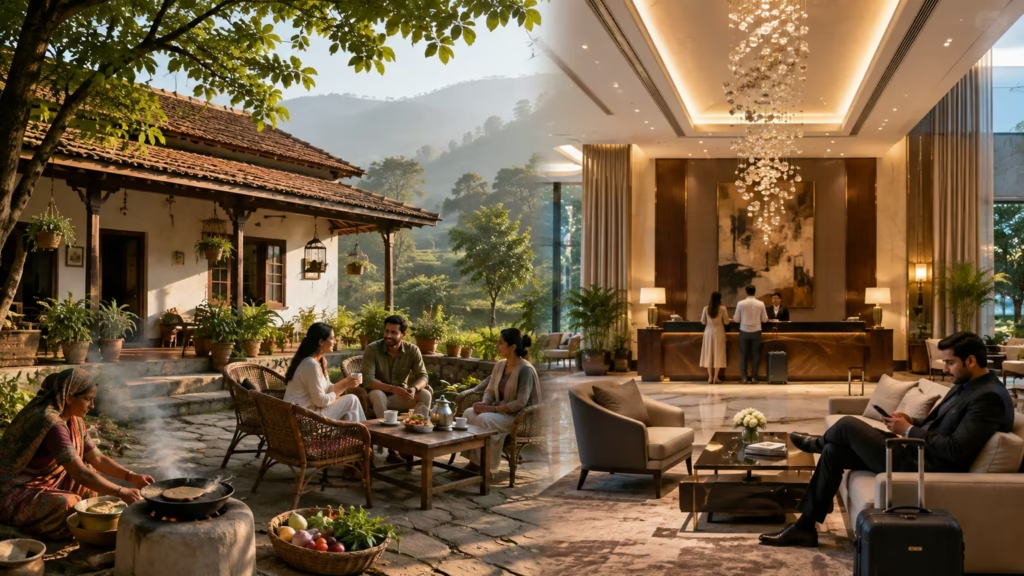
Industry chatter around boutique hotel trends points out that hyperlocal experiences, smaller guest counts, artisan collaborations, and design that reflects the region rather than a global template play an important role and thus are all major contributors, which large hotel groups have started to notice. As a result, some hotels are now silently integrating ‘experience desks’ and craft-workshop add-ons into their luxury offerings, trying to bring the soul of a homestay into a 200-key property. However, it rarely works out well, as authenticity is challenging to scale.
Not long ago, luxury meant having more space, more staff, more marble. But for quite some time, the meaning of luxury has changed to meaningful experiences for a growing number of Indians as well as international travellers. It is about having a story to tell, a skill learned by hand, or a host who remembers your name without looking at the guest-services app.
This does not mean that five-star hotels are disappearing. But they are no longer the only definition of a good stay. Increasingly, not even the most desirable one.