From overseas hotspots to homegrown destinations, India’s wedding preferences are evolving, with the country’s dream destinations winning over couples. Here’s what is driving this shift and why it matters.
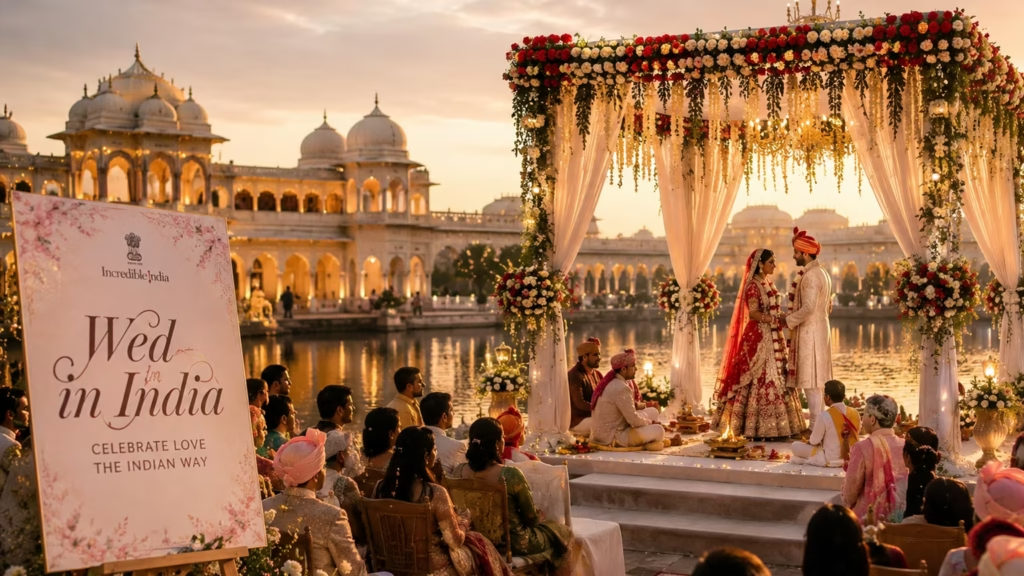
For years, a ‘big fat Indian wedding’ meant flying to an international destination such as Phuket, Bali, or Dubai before even considering India. And these overseas destination weddings were seen as the ultimate status symbol for affluent Indian families. But as times change, so do the trends, with an increasing number of Indian couples preferring to tie the nuptial knot at home rather than step outside. They are swapping luxury resorts for Rajasthani forts, Kerala backwaters, Himalayan retreats, and Goan beach shacks.
What started as a compromise during the pandemic has evolved into a real shift in how India celebrates its weddings, reshaping tourism, hospitality, and local economies along the way. It is also turning India’s wedding industry into one of the country’s biggest economic growth stories.
A Market Too Big To Ignore
India’s wedding industry is a significant economic player in its own right. Jefferies estimates the sector’s worth at around $130 billion (₹11.05 lakh crore including spending on travel, gifts, and hospitality) annually, making it one of India’s largest industries by value. Even a single wedding season carries significant economic weight: according to a Confederation of All India Traders (CAIT) projection, the 45-day North Indian wedding season is expected to generate nearly ₹6 to ₹6.5 lakh crore in economic activity, equivalent to almost 2% of India’s annual GDP.
India hosts more than 10 million weddings each year, making it the second-largest wedding market in the world, the India Brand Equity Foundation (IBEF) stated. Within this vast market, destination weddings are among the fastest-growing segments. Grand View Research values India’s destination wedding market at $16.25 billion in 2024, with projections reaching $55.39 billion by 2033, showing a compound annual growth rate of nearly 15%. A narrower segment covering wedding planning services, venues, and travel logistics is expected to grow from around $2.66 billion in 2025 to $8.29 billion by 2032, reflecting a year-on-year growth rate of about 35% (MarkNtel Advisors).
According to WedMeGood’s Annual Wedding Industry Report for 2025-26, about one in four Indian weddings is currently a destination wedding, and this figure is expected to rise to 30-32% by 2028 as couples increasingly opt for experience-led celebrations. Also, the average destination wedding now costs about ₹58 lakh, up from ₹51 lakh in 2024, confirmed Mehak Shahani, Co-Founder, WedMeGood.
Government Backing ‘Wed in India‘
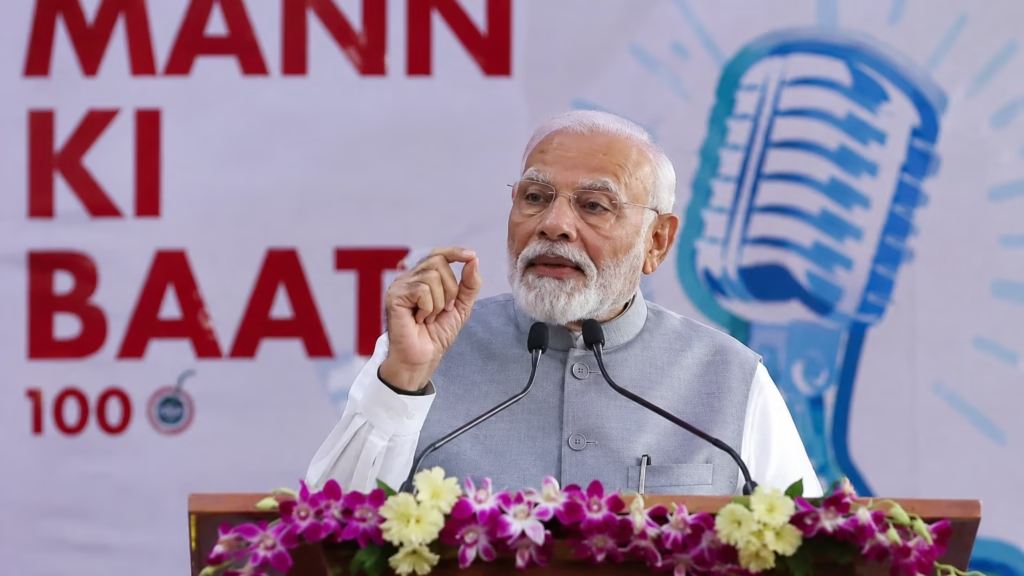
This shift has a strong policy push behind it. In 2023, Prime Minister Narendra Modi urged Indian families to host weddings within the country rather than abroad. He framed it as an economic choice: keeping wedding spending in India benefits local workers and businesses, instead of flowing overseas.
This call led to policy changes. The Ministry of Tourism launched campaigns, including ‘Wed in India’ and the global outreach initiative ‘India Says I Do’, aimed at positioning India as a top global wedding destination. At the first Wed in India Expo, held in Jaipur in May 2024 alongside the Great India Travel Bazaar, tourism officials highlighted rapid state-level infrastructure development as a key enabler, with industry bodies noting that India has over 2,000 venues suitable for grand celebrations.
Following the Centre’s lead, states have responded with their own initiatives:
- Uttar Pradesh is promoting its forts, palaces, and heritage sites, such as Mathura-Vrindavan and Chunar Fort, as wedding venues under its Tourism Policy 2022, as part of a strategy to boost the state’s tourism economy.
- Telangana has unveiled plans to develop wedding hubs around scenic sites such as Ananthagiri Hills and Nagarjuna Sagar.
- Rajasthan remains the benchmark: state officials reported around 40,000 weddings generating close to ₹2,500 crore in business in a single wedding season.
Taking this appeal to international platforms, India’s Ministry of Tourism in November 2024 promoted wedding tourism as a key theme at World Travel Market (WTM) London, showcasing a recreated wedding mandap to give overseas audiences a glimpse of the experience.
Destination Weddings Are Multi-Day Tourism Engines
A destination wedding is rarely a single-day affair. It typically lasts 3 to 7 days across multiple ceremonies: haldi, mehendi, sangeet, wedding, and reception, with an average guest count of 310 to 330 people, much higher than the typical 80-115 guest count of US or UK weddings. Each additional day and guest means more hotel stays, local transport, sightseeing, shopping, and dining expenses flowing into the host destination.
A destination wedding turns a family celebration into a multi-day tourism package, with guests often extending their stays to explore the area, resulting in repeat visits and word-of-mouth promotion for the destination. This trend is also decentralising tourism revenue more evenly and beyond traditional hotspots.
Industry observers note that Tier II and III cities are capturing this demand, expanding wedding tourism beyond usual metro areas to places like Coorg, Kumarakom, Rishikesh, and Hampi, alongside popular spots such as Udaipur, Jaipur, and Goa. This helps distribute economic benefits well beyond the metro cities.
Luxury Hospitality Building Around The Wedding Boom
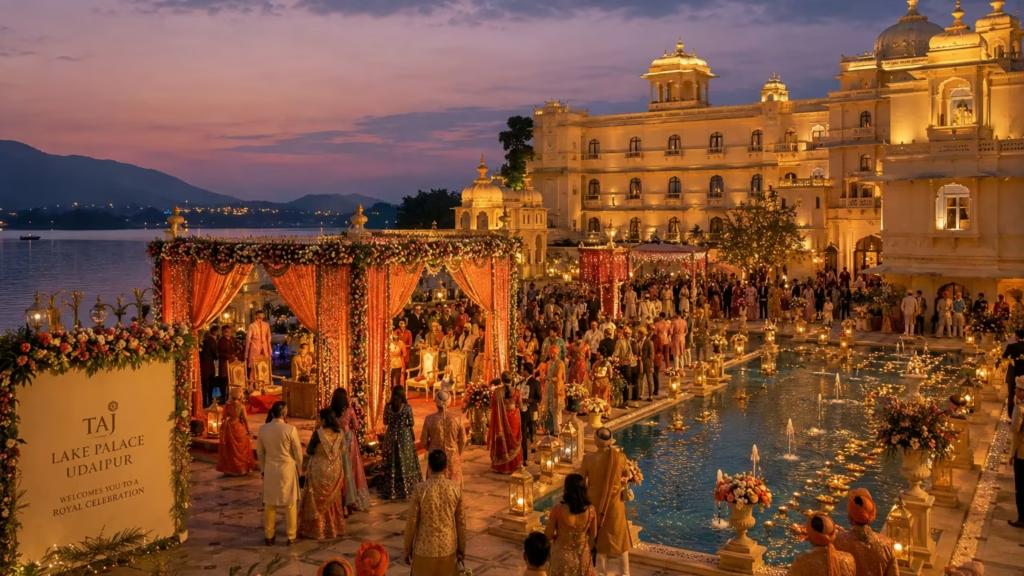
Perhaps the clearest sign of how seriously the hospitality industry is taking this shift is its growing investment in luxury hotels and dedicated wedding offerings. India’s luxury hotel market is estimated to be worth roughly $3.64 billion in 2025 and is projected to reach $6.93 billion by 2031, according to Mordor Intelligence, with weddings cited as a crucial demand driver alongside rising domestic leisure travel and recovering corporate demand.
The big names are moving accordingly:
- Taj Hotels (IHCL) leads the luxury segment and aims for 700 hotels by 2030 as part of its “Accelerate 2030” strategy, backed by a ₹5,000 crore capital expenditure plan announced in late 2024 (a subsequent 2026 update from IHCL has since expanded this to a ₹6,000-7,500 crore range), with destination weddings cited as a core growth driver along with domestic luxury travel and curated experiences.
- International hotel chains are entering specifically to cater to weddings. Hilton’s Waldorf Astoria Jaipur and Minor Hotel’s Anantara Jewel Bagh Jaipur, for instance, were designed to focus on weddings, meetings, and events, aligning directly with India’s outsized wedding spending.
- Heritage cities, beach destinations, and hill stations are all seeing new luxury openings linked to this demand, with food and beverage (F&B) and events revenue expected to be meaningful contributor to luxury hotel performance.
For a multi-day destination wedding, venue and accommodation now generally consume 40-50% of the total budget, significantly higher than the 30-35% share seen at local, single-city weddings. This concentration of spending is exactly why hospitality brands view weddings as a dedicated business area rather than an occasional banquet booking.
Local Employment Multiplier
Perhaps the most overlooked aspect of this trend is its impact on jobs. The Indian wedding industry as a whole supports an estimated 5 to 10 million full-time positions and another 10 to 20 million seasonal jobs during peak wedding months, as per Kotak Mahindra Mutual Fund’s analysis of CAIT data. A single 45-day wedding season is projected to create over 10 million jobs and add around ₹75,000 crore in tax revenue.
Destination weddings amplify this effect locally. Unlike a hometown wedding, a destination event pulls in an entire regional supply chain, including decorators, florists, transport operators, folk performers and musicians, photographers, caterers who source local ingredients, artisans, and temporary staff at hotels and venues. When a wedding occurs in a smaller town or heritage site, the majority of that spending stays within local businesses instead of going to metro-based agencies.
There is also a strong ‘vocal for local’ thread running through this growth, supporting local businesses. Recent wedding season data shows that over 70% of wedding-related purchases are now made in India, reinforcing that the domestic wedding boom is benefiting the country’s manufacturing, craft, and retail sectors, not just venues.
Why Couples Are Choosing India
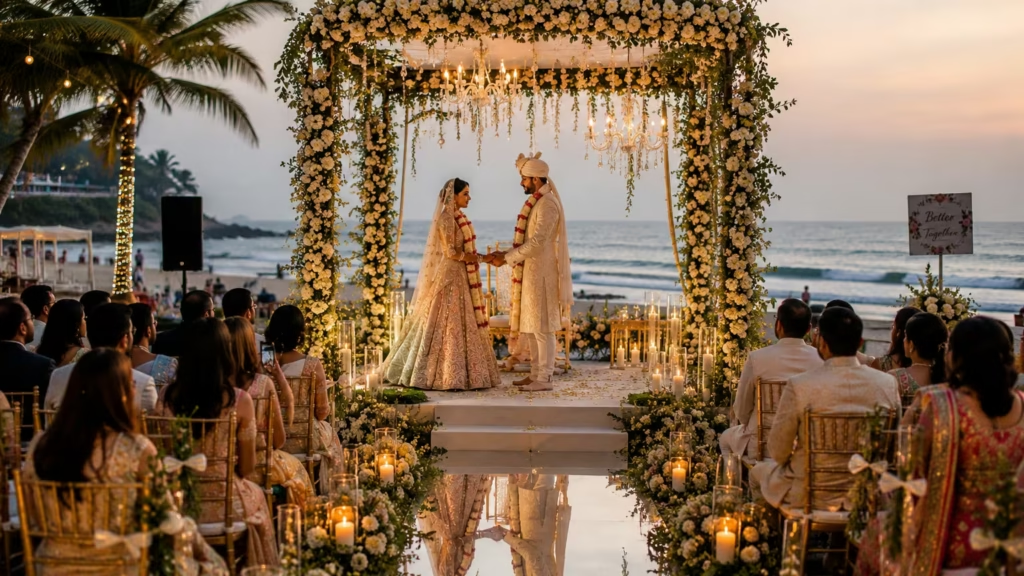
The preference for domestic destinations comes from a mix of practical and emotional reasons:
- Cultural familiarity & ease of logistics: no visa complications for the majority of guests, familiar cuisine options, and easier coordination for large, multi-generational guest lists.
- World-class venues at home: heritage palaces, backwater resorts, and hill retreats now match international properties in luxury and service standards.
- National sentiment: the ‘vocal for local’ mindset extends to celebrations, with many families actively choosing to spend within India.
- Value for money: many domestic destinations still offer better all-inclusive packages for similar luxury compared to premium international resorts.
However, it is important to note that the pull of popular international destinations such as Sri Lanka, Thailand, Bali, Vietnam, and Malaysia has not disappeared. Competitive airline pricing and bundled resort packages keep these markets attractive for affluent NRIs and Indian couples. Some industry experts highlight that peak-season domestic airfare can sometimes match short-haul international fares. That is precisely why ongoing government promotion, continued infrastructure investment, and improvements in domestic connectivity remain important. The momentum towards ‘Wed in India’ is real and measurable, but it is still a contest that needs to be actively won.
The Bigger Picture
With spending on destination weddings projected to more than triple by 2032, luxury hospitality brands are reshaping their India strategies around weddings, while government campaigns are actively targeting NRIs and foreign couples to marry in India. The future, therefore, looks promising. The country is not just competing for a share of the global wedding tourism market; it aims to become a leader in this area.
For India’s tourism boards, hoteliers, and local economies, every wedding held in the country represents more than a celebration. It creates jobs, generates revenue, and puts destinations in the spotlight, turning each wedding into a gift that benefits the economy at large.