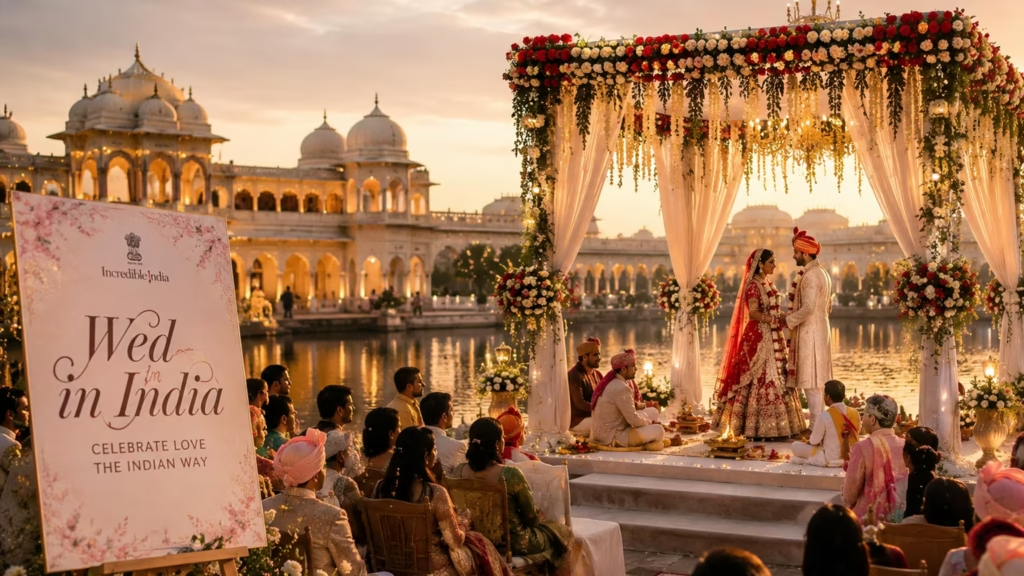
Planning a destination wedding is exciting until the questions start piling up. Before you get lost into endless searches, get these important answers first before saying ‘I do’ far away from home.
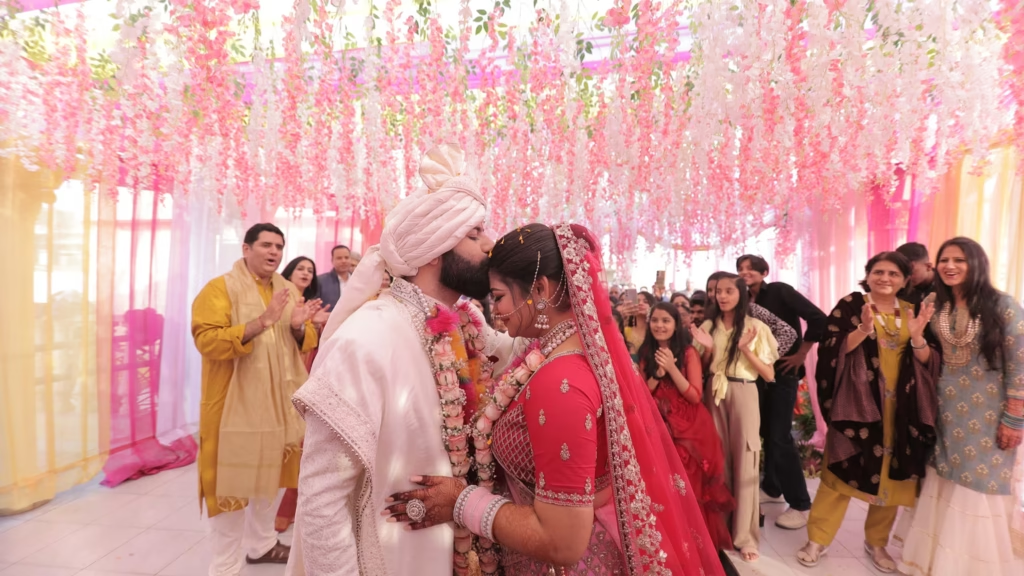
Somewhere between saying yes and picking a venue, every couple hits the same wall of questions. What is trending right now? Which destination is actually worth the hype? How much should your budget be? Who pays for what, and will your wedding be legally valid? We have pulled the most Frequently Asked Questions (FAQs) from couples planning their dream destination wedding in India, from budgets and visas to legal recognition, so you can spend less time Googling and more time pampering yourself.
Q1. Which Wedding Destination Is Trending In India In 2026?
Alongside all-time favourites like Udaipur and Goa, hill and eco-luxury destinations such as Himachal Pradesh, Uttarakhand, and Coorg are gaining momentum this year. This trend is being driven by couples wanting cooler climates, smaller guest lists, and more intimate, nature-based settings.
Q2. What Are The Best Alternatives To Rajasthan For A Destination Wedding?
Goa and Kerala for beach and backwater settings, Coorg and the Nilgiris for a garden-and-coffee-estate vibe, Himachal Pradesh and Uttarakhand for mountain weddings, and Jim Corbett for a jungle-luxury vibe are all excellent alternatives with growing vendor infrastructure.
For more options, check out these trending destinations https://travscoop.com/wedding-and-events/tying-the-knot-in-2026-20-wedding-destinations-beyond-jaipur-udaipur/
Q3. Which Destination Is More Affordable, Goa Or Kerala?
Goa is generally a more budget-friendly choice for larger weddings due to its high number of wedding-ready resorts and established vendor competition, which helps keep package prices more flexible. However, Kerala can be competitive for smaller, backwater weddings, but limited venue and vendor options can push costs up for larger guest lists.
Q4. Which Hill Station Is Best For A Destination Wedding?
It depends on the size of your guest list and the season. Shimla and Mussoorie offer better connectivity and hotel inventory for larger weddings, while Coorg and parts of Himachal Pradesh (Kasauli or the Kangra Valley) are better suited for smaller, more private celebrations with a serene, green backdrop.
Q5. Which Beach Destination Is Best For A Luxury Wedding?
Goa remains the top choice for luxury beach weddings in India, given its high-end resort options, direct flights from most metro cities, and experienced vendor teams that manage large-scale Indian events. For more exclusivity, the Andaman Islands are becoming popular among couples planning smaller, intimate celebrations.
Q6. What Is The Average Destination Wedding Budget In India?
Budgets vary widely based on destination, guest count, and season. However, a mid-to-large luxury destination wedding (100 to 150 guests, over 2 to 3 days) in a prime location like Udaipur or Goa typically costs from roughly ₹40 lakhs to over ₹1 crore, particularly if you are considering palace venues and peak-season dates that can inflate expenses.
Q7. How Far In Advance Should You Start Planning A Destination Wedding In India?
Ideally, you should start planning 8 to 12 months ahead, especially if you are eyeing a popular venue in Udaipur, Jaipur, or Goa. Well-known properties get booked over a year in advance during peak season. If you can be flexible with dates or pick a lesser-known destination, you can still make it work in 5 to 6 months.
Q8. How Many Days Should A Destination Wedding Typically Last?
Most Indian destination weddings last from 2 to 4 days, covering events such as mehendi, sangeet, haldi, and the main ceremony. Bigger, more elaborate weddings sometimes stretch to 5 days, but anything longer usually adds cost without any value addition for most guests.
Q9. Who Usually Pays For Guest Travel & Accommodation, The Couple Or The Guests?
This can vary by family, but the most common setup in India is that the couple’s families cover accommodation (often by reserving rooms at a negotiated rate), while guests book and pay for their own flights or trains. For very close family or the wedding party, some couples may cover travel, but that is less common.
Q10. Do NRIs Or Foreign Guests Need A Visa To Attend A Wedding In India?
No, Non-Resident Indians (NRIs) generally do not need a visa to enter India if they are Indian citizens. Foreign nationals, however, generally need a valid visa to enter India, and for eligible nationalities, an e-tourist visa is sufficient to attend a wedding. NRIs with an Overseas Citizen of India (OCI) card do not need a separate visa. It is advisable to inform guests early about this since e-visa processing can take a few days to a couple of weeks, depending on nationality.
Q11. What Is The Ideal Guest Count For A Destination Wedding?
There is no fixed number, but 80 to 150 guests is an ideal figure for most Indian destination weddings. This size is big enough to feel festive, yet small enough for venues to host comfortably and to keep logistics like travel and rooms manageable. Larger weddings with over 300 guests are still common, but they require a destination with plenty of hotel inventory, such as Udaipur or Goa.
Q12. Is A Wedding Held In India Legally Valid For NRI Or Foreign National Couples?
Not automatically. A destination wedding ceremony, including pheras, rituals, and the celebration, is not the same as legal marriage registration. To register a marriage in India under the Special Marriage Act, one partner usually needs to have lived in the district for at least 30 days before applying, and the process itself takes time. Many NRI and foreign couples have their ceremonial wedding in India and register the marriage legally in their home country instead. Some others plan ahead to meet the residency requirement if they want it registered in India.
Q13. Is A Destination Wedding More Economical Or More Exorbitant Than A Hometown Wedding?
It depends on the guest count and choices, but destination weddings are often not economical; they just shift where the money goes. You save money on some things (smaller guest lists, not needing a large banquet hall back home), but you add costs for vendor travel, guest accommodations, and multi-day events. Couples usually end up spending a similar amount, just on a different mix of things.
Q14. Should You Hire A Destination Wedding Planner Or Manage It Yourself?
For a small, single-venue wedding with under 50 guests, some couples manage on their own with the help of the resort’s in-house team. For bigger weddings or those spread across multiple functions and vendors, hiring a planner is worthwhile. They know local vendors, can negotiate better rates, and handle dozens of small issues that pop up in the final weeks, which can be hard to manage from another city.
Q15. Does Peak Wedding Season (Oct–Feb) Cost More Than The Off-Season?
Yes, it usually does for both destination weddings in India and native ones. Venue rental and vendor rates both climb during peak season because demand is high and the weather is at its best across most of India. Booking during the shoulder months or choosing a destination where the off-season offers pleasant weather (like hill stations in summer) can significantly reduce costs.